Your monthly money map
Separate essentials, flexible spending, and irregular costs. Calculate the difference without judging the result.
Download worksheet (TXT)
The Arvexa learning room
Less jargon. More “now I get it.”
Build a practical money toolkit, not just a list of finished lessons. Learn to compare a loan offer, map your cash flow, spot a scam, and make your own informed decisions. Five guided paths turn everyday questions into skills you can practice.
Find my next courseYour private learning record
All lessons stay free without an account. Use your email and password to resume on another device and work toward a verifiable certificate. No bank linking, product application, or marketing consent required.
We use your name to personalize your private learning account and your email for authentication and your learning record. Your certificate name is a separate choice when you finish. See our education privacy details.
Your learning, your pace
Without signing in, lesson check-offs, quiz answers, and best scores are saved only in this browser on this device. Clearing browser data removes them; they do not sync between devices.
27 courses to your complete curriculum milestone. Every finished lesson is a step forward.
Loading device progress...
An achievement worth keeping
Complete all 27 courses and pass every knowledge check at 75% or higher in your account. Then personalize your certificate, print or save it as a PDF, and share its verification link.
Sign in above to build your verified learning record. Device-only progress cannot issue a certificate.
A non-accredited certificate of educational completion. Not a professional certification, proof of identity, financial advice, or a guarantee of loan eligibility or financial results.
Tools to keep, not forms to submit
Download accessible, editable worksheets to use privately on your device or print. Nothing you write in them is sent to Arvexa. You choose whether and how to apply the learning.
Separate essentials, flexible spending, and irregular costs. Calculate the difference without judging the result.
Download worksheet (TXT)Put APR, fees, amount received, monthly payment, and total repayment side by side before making a decision.
Download worksheet (TXT)List balances and minimums, compare payoff approaches, and choose a review date that works for you.
Download worksheet (TXT)A practical checklist for checking a caller, protecting your information, and responding to a suspicious offer.
Download worksheet (TXT)Choose your next skill
Follow one of five learning paths or pick a question that matters today. Every course has three or four short lessons, worked decision practice, offline activities, independent sources, and a four-question quiz with explanations. Complete the lessons and score 75% to finish; retries are always available.
27 courses found · Showing 1–9 · Page 1 of 3
Budgeting
Give your money a map. Explore a flexible budget, expense patterns, and a check-in you can actually maintain.
Spending habits
Swap autopilot for awareness with a purchase pause, a subscription audit, and a judgment-free weekly reflection.
Saving
Explore starter buffers, small saving habits, and the difference between an emergency and a predictable annual bill.
Planning
Turn a vague wish into a measurable plan with milestones, a realistic pace, and room for life to change.
Consumer safety
Practice spotting pressure, impersonation, and suspicious payment requests before sharing information or sending money.
Financial literacy
Decode account types, read the flow of a statement, and practice the vocabulary behind everyday banking.
Credit
Separate credit myths from useful habits, check a report for errors, and build a realistic recovery plan.
Debt choices
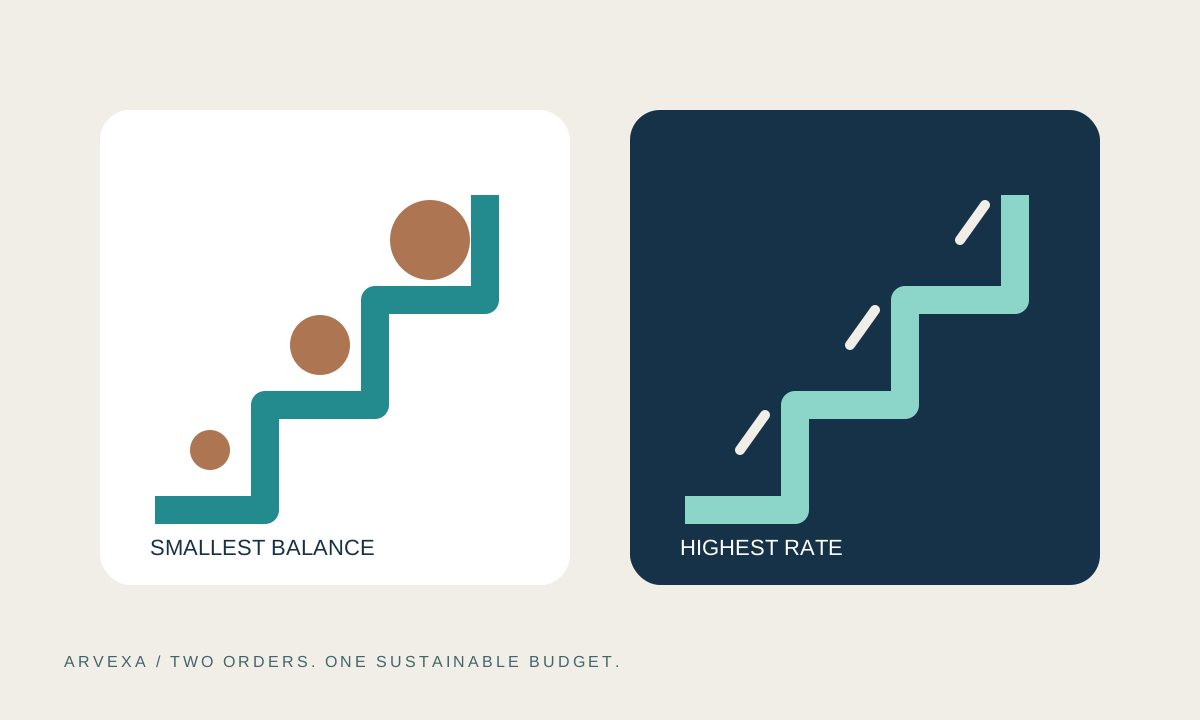
Compare snowball, avalanche, hardship help, and balance transfers using clear examples instead of one-size-fits-all promises.
Borrowing
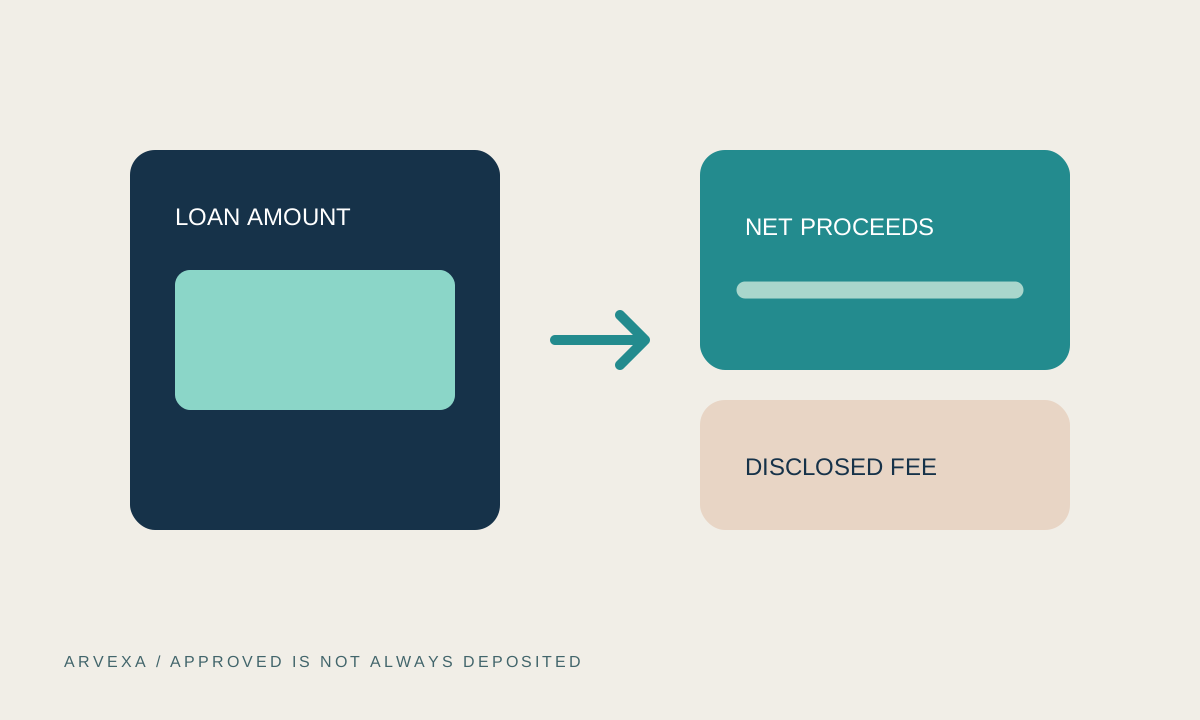
Go beyond the monthly payment: compare APR, origination fees, cash received, term length, and verification requests.
Come back with a question
A quick decision from our course library. This review exercise rotates weekly; it is not a new lesson release and does not change your course score.
Explore: Your Paycheck & Tax BasicsRevisit a scenario, compare your reasoning with the explanation, or pick a different path. You never need to apply for a product to learn.
Quick-reference learning tools
The credit charts and savings-first guidance from our Learn library, together in one place. Get a quick explanation here, then practice the ideas in a course.
These are general FICO reference ranges and factor weights, not lending requirements. Other scoring models and lenders may use different categories. No chart predicts an approval or a specific score change.
Find your score’s general category. The bands show categories, not approval odds or a promise of improvement.
Payment history and amounts owed generally carry the most weight. These percentages describe broad categories; their importance can vary with the credit profile.
Bars share a 0–100% scale. A factor’s weight is not the number of points you can gain by changing it.
Review reports for errors and focus on affordable, consistent payments. High revolving balances may be worth reviewing, but protect essential expenses. Improvements take time and are not guaranteed.
Maintain timely payments, review utilization, and avoid opening accounts you do not need. A score is one part of borrowing readiness—not a reason to take on more debt.
Continue sound payment habits and manageable balances. Do not borrow just to add credit mix. Strong credit still needs a sustainable budget and reserves behind it.
Source references: FICO score basics and what makes up a FICO score. Your lender may use a different score or version.
Borrowing power is not the same as financial security. Explore the guides below for a balanced approach to preparation, debt payoff, and credit.
Build a cushion so short-term surprises are less likely to become long-term debt.
Borrowing may be useful when it supports a real need and fits a realistic repayment plan.
Track savings and financial preparedness alongside debt balances and credit health.
A credit score can open doors to borrowing, but savings creates stability. A strong score does not automatically mean a household can handle an unexpected expense.
Cash reserves can help cover car repairs, medical bills, utility spikes, job interruptions, and changes in household costs without immediately taking on more debt. Having money set aside can create room to respond calmly rather than borrow under pressure.
Financial shocks can push people toward another loan, balance transfer, or revolving balance when there is no reserve. This does not mean every person is overspending; sometimes they are managing an emergency without a financial buffer.
High balances, repeated reliance on revolving debt, and missed or delayed payments can strain both a credit profile and a household budget. Preparation matters alongside borrowing access.
Paying down debt can be sensible, especially when interest is costly. But using every extra dollar for debt while keeping no reserve can leave a person borrowing again when the next setback arrives.
Consider required payments, interest costs, essential living expenses, and a realistic cushion together. There is no single allocation that fits everyone. Even modest reserves can reduce the chance of repeating the same debt cycle.
Credit cards and loans are not inherently bad. Like a tool in a toolbox, they work best when they fit the job. The question is not only whether credit is available, but whether it is the right tool for the need.
Borrowing with a clear purpose, affordable payments, and an understanding of total cost is different from borrowing because there is no cushion. Compare the available options and repayment risks rather than treating a higher credit limit as greater financial security.
The goal is not to reject credit or chase a perfect score. It is to use credit intentionally while building reserves, reducing unnecessary dependence on debt, and preparing for real life.
Financial strength usually grows through steady habits, realistic expectations, and preparation—not one dramatic decision. Pair lower harmful debt with stronger personal reserves, and make choices that fit your circumstances.
Build an emergency reserve planGeneral education, not individualized financial, legal, or tax advice. No financial input or account linking is required. These reference tools do not calculate a credit score or determine product eligibility.
At Arvexa Financial, we believe financial wellness starts with education. Our mission is to provide clear, accessible financial literacy resources that empower people to make informed decisions about their own finances.
We hold ourselves to clear standards in how we develop and share educational content:
Trust is not a tagline. It is a requirement.
We present financial wellness information in plain, accessible language. That includes helping you understand:
We believe well-informed people make better financial decisions for their own situation.
Every final decision belongs to the customer.
Our resources are designed to inform, not direct. You make your own choices:
No obligation. No coercion. Clear information.
We maintain standards that support trust and accountability, including:
If you have questions about our educational resources or want to get started on your financial wellness journey, our team is here to support you.
Arvexa Financial provides general educational information for financial wellness. Content is informational only and should not be considered legal, tax, or financial advice. Any decisions you make are solely your responsibility.
Arvexa Financial LLC provides general financial education and connects consumers with independent providers. Arvexa is a marketing affiliate, not a lender, law firm, tax advisor, or settlement administrator. Lenders and independent providers set their own terms and make their own decisions; no approval, savings, or outcome is guaranteed.
Phone
(888) 901-6908
contact@arvexafinancial.com
These educational resources are written for a United States audience. No course requires you to purchase or enroll in a financial product.