Debt Settlement vs. Bankruptcy: Tradeoffs, Not Rankings
Bankruptcy is a court process with an automatic stay; settlement is private negotiation with no guarantee. Compare cost, credit impact, and legal risk before choosing.
What to take away
- Bankruptcy is a legal process; settlement is private negotiation.
- Settlement cannot provide the automatic stay available in bankruptcy.
- Speak to a qualified attorney about eligibility and legal protections.
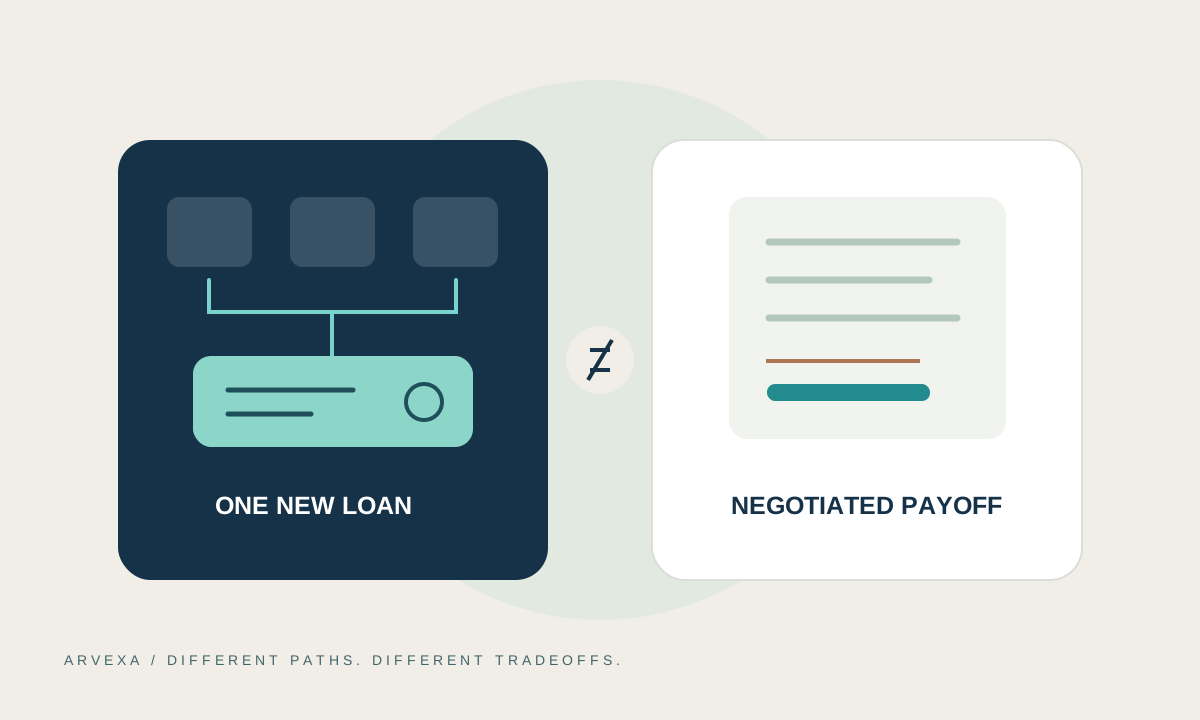
Bankruptcy and debt settlement are often presented as rivals. They are better understood as different tools with different costs, and neither should be chosen from an article alone.
Bankruptcy: a court process with legal protections
Bankruptcy is a federal court process. Chapter 7 can discharge most unsecured debts, usually within a few months of filing, but it stays on a credit report for 10 years and has income-based eligibility rules. Chapter 13 sets up a court-supervised repayment plan lasting three to five years, and it reports for 7 years. Bankruptcy can stop most collection activity through an automatic stay, which settlement cannot do. It can also involve giving up non-exempt assets, depending on the chapter and your state. Some debts, such as most student loans, child support, and recent taxes, generally cannot be discharged.
Settlement: a private negotiation without guarantees
Debt settlement is a private negotiation, not a court process. There is no automatic stay, no court protection, and no guarantee a creditor will settle. Creditors can continue calling, add late fees and interest while you are not paying, and in some cases sue. Programs typically run about 24 to 60 months. The credit damage comes mainly from missed payments and settled accounts, and it is generally less severe and shorter-lived on a report than a bankruptcy filing — but it is still significant, and it is not a reason to prefer settlement automatically.
Why a personal review matters more than a ranking
Settlement may be considered when bankruptcy is not wanted or not available and full repayment is not realistic. Bankruptcy may be the more honest option when debts are overwhelming relative to income, lawsuits or garnishment are already in play, or a settlement program would take years with no realistic funding. A bankruptcy attorney consultation, often free, is the right way to learn whether you qualify and what it would actually cost you.
Do not let anyone rank these for you without your numbers in front of them. The decision turns on income, assets, debt type, state law, and how much credit damage and legal risk you can accept — all of which require a personal review, not a general article.
Checking your reading status...
Marked read when you reach this ending. Saved only in this browser, with no login. Clearing site data removes your reading history. Marking unread keeps it unread for the rest of this visit.