Debt Settlement vs. a Debt Consolidation Loan: the Difference That Matters
Debt settlement is not a debt consolidation loan. One reduces principal through negotiation; the other is new borrowing repaid in full. Compare the tradeoffs.
What to take away
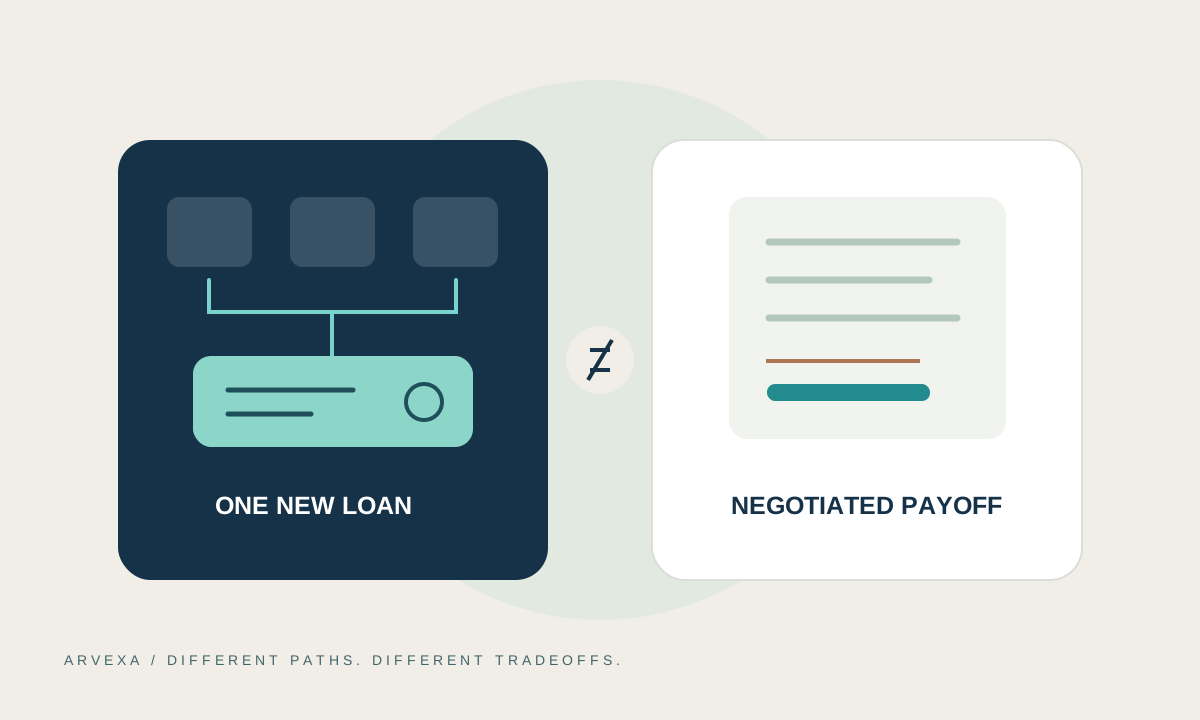
- A consolidation loan repays existing debts with new borrowing.
- Settlement seeks a reduced payoff but carries credit and legal risks.
- Compare total cost, affordability, and uncertainty, not just monthly payments.
Debt settlement is not a debt consolidation loan. That distinction matters more than any other comparison in debt relief, because the two paths do opposite things to the amount you owe.
A loan simplifies repayment, not principal
A debt consolidation loan is new borrowing. One loan pays off your existing debts, and you then repay that loan in full, plus interest, on a fixed schedule. It simplifies payments and may lower your interest rate, but it does not reduce the principal you owe. It also requires credit approval — if your credit is already damaged or your debt-to-income ratio is high, you may not qualify, or the rate may not help.
Settlement depends on creditor agreement
Debt settlement does not involve a new loan. Instead, you stop paying enrolled creditors directly and make a monthly program deposit into a dedicated savings account. A provider negotiates with each creditor to accept a reduced lump sum. If a creditor agrees and you approve the offer, that account is resolved for the agreed amount. If a creditor refuses, there is no settlement for that account, and the account remains outstanding.
Four tradeoffs to compare side by side
- Credit: A consolidation loan, paid on time, generally carries less credit damage than settlement, because settlement usually involves missed payments while savings build. Settled accounts are typically reported as settled for less than the full balance.
- Total paid: Settlement aims to reduce principal; a loan repays principal in full. But settlement fees, taxes on forgiven debt in some cases, and the risk that some creditors refuse can narrow or erase that difference for a given person.
- Certainty: A loan gives a fixed payment and term from day one. Settlement gives no guarantee that any particular creditor will settle, or when.
- Fit: A loan tends to fit people who are current on payments and can afford the new payment. Settlement tends to be considered when full repayment is not realistic and hardship is documented — not as a shortcut for someone who could repay in full.
Choose the tradeoff you can live with
Neither path is "better" in the abstract. The right question is which tradeoff you can actually live with: repaying everything on a new loan, or accepting credit damage and uncertainty in exchange for a chance to settle for less.
Checking your reading status...
Marked read when you reach this ending. Saved only in this browser, with no login. Clearing site data removes your reading history. Marking unread keeps it unread for the rest of this visit.