Arvexa Financial
AboutLoan OptionsDebt ReliefHow It WorksFinance EducationBlogFAQ
(888) 901-6908OFFICE OPENMon-Fri, 8 AM-5 PM Pacific Time
Review My Options
The Arvexa Journal
Planning ahead

Can You Cancel a Debt Settlement Program? Questions to Ask First

Leaving a program, stopping an automatic transfer, and resolving your debts are different actions. Understand each before changing anything.
Arvexa Financial Editorial Team
Published October 25, 20263 min readChecking reading status...
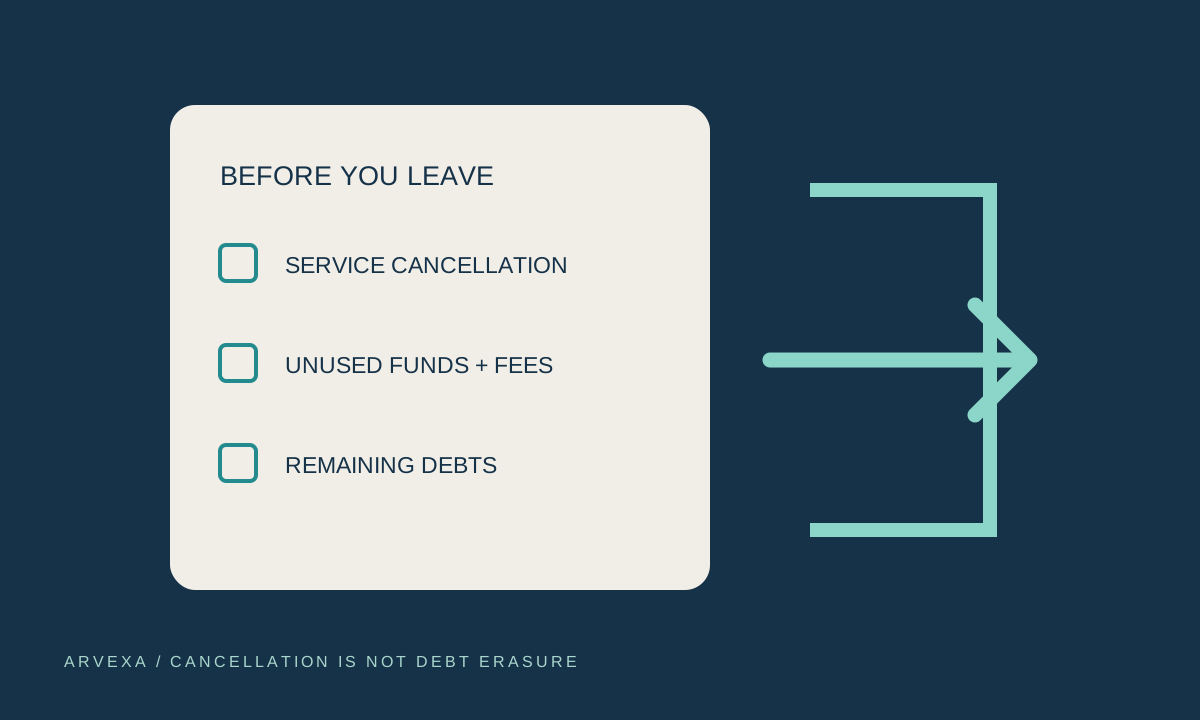
A program agreement with separate checkboxes for cancellation, account funds, and remaining debts.
Clarify what ends, what remains owed, and what happens to funds already committed.

In this article

  1. Identify the provider and the account administrator
  2. Review rights alongside pending commitments
  3. Do not confuse service cancellation with debt cancellation
Your next step, on your terms.

Explore loan options without affecting your credit score.

Check My Options
The short version

What to take away

  • Contact the program provider and account administrator, not just the referral company.
  • Review earned fees, pending payments, and the treatment of unused funds.
  • Canceling a service does not erase unresolved debts or automatically stop lawsuits.

If your budget changes or a settlement program no longer fits, ask about the exit process before making assumptions. Canceling the provider's service, changing an automatic bank transfer, withdrawing unused funds, and changing a creditor settlement are separate actions. One request may not accomplish all of them. The agreement and applicable protections need to be reviewed together.

Identify the provider and the account administrator

A referral company may have introduced you to the program, but the settlement provider administers its services and a separate institution may hold the dedicated account. Use verified contacts from your actual documents. Arvexa does not administer partner programs, hold program funds, or control a provider's cancellation decisions.

Ask for written cancellation instructions and a current accounting. That accounting should help distinguish available funds, earned fees, pending creditor payments, and any account-administration charges. Do not assume the entire amount ever deposited remains available for refund after payments or valid earned fees.
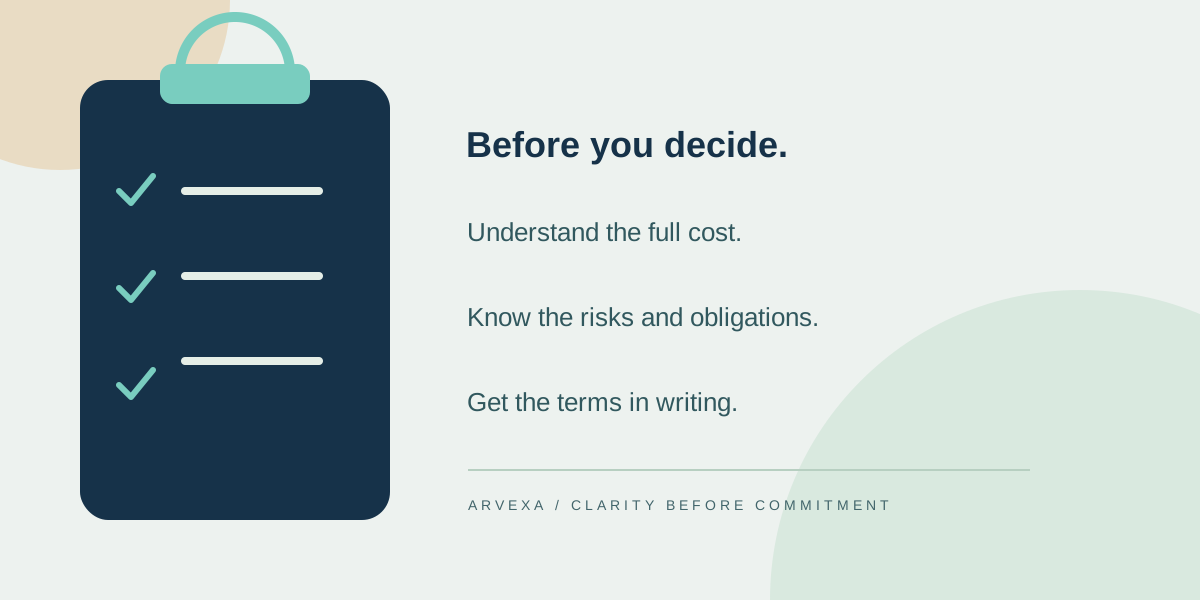
A three-point decision checklist: understand the full cost, know the risks and obligations, and get the terms in writing.
A useful checkpoint for any financial decision, no matter which path you explore.

Review rights alongside pending commitments

For covered dedicated accounts under the FTC's debt-relief rule, consumers have ownership and withdrawal protections, including the ability to leave without a penalty and receive unspent funds, subject to the rule's terms. Ask how those protections apply to your account and how any lawfully earned fees or completed payments are reflected. A general article cannot determine your exact refund.

  • Which settlements have already been accepted, and are payments pending?
  • What fees have been earned and collected, and what written basis supports them?
  • How will unused funds be returned, and what is the applicable timeline?
  • How do you confirm the service cancellation and any separate account or transfer changes?
  • What obligations remain directly with creditors after you leave?

Do not confuse service cancellation with debt cancellation

Unresolved creditors may still seek payment, and court deadlines do not disappear when a program ends. Changing a bank authorization also does not by itself amend a settlement agreement or eliminate a debt. Obtain appropriate advice before disrupting an accepted payment arrangement that could have consequences under its terms.

If you may want to re-enroll later, ask the actual provider about current criteria, fees, and the status of each account. There is no universal Arvexa re-enrollment policy for third-party programs. Keep the final accounting, cancellation confirmation, and creditor records so a future review starts with accurate information.

Disclosure: General education, not legal advice, a refund calculation, or cancellation of any agreement. Rights and procedures depend on applicable law and account terms. Arvexa cannot cancel a provider program or guarantee re-enrollment.

Sources & further reading

  • FTC: debt relief dedicated accounts and withdrawal protections
  • CFPB: dedicated-account fees and settlement risks

Checking your reading status...

Marked read when you reach this ending. Saved only in this browser, with no login. Clearing site data removes your reading history. Marking unread keeps it unread for the rest of this visit.

Clarity is a good place to start

Let’s talk about your next move.

Explore personal loan options or ask questions about debt relief. Checking loan options uses a soft credit inquiry. There is no obligation to proceed.

Review My Options (888) 901-6908

Educational information, not individualized financial, legal, or tax advice. Arvexa is not a lender. Approval, savings, and outcomes are not guaranteed.

Keep the clarity going

All articles
  • A calendar and milestones along an unfinished path, illustrating a variable debt relief timeline.
    Planning ahead

    How Long Does a Debt Relief Program Take? Why 24–60 Months Is the Realistic Range

    Most settlement programs run about 24 to 60 months. The timeline is set by enrolled debt, monthly deposit, and how creditors respond — not by a calendar.

    Published October 24, 20262 min readChecking reading status...
  • Two jars balanced on a scale, representing emergency reserves alongside debt repayment.
    Savings & debt planning

    Emergency Fund or Pay Off Debt? How to Think About Both

    Sending every spare dollar to debt can feel productive—until the next surprise bill. A practical framework helps you weigh interest costs against financial breathing room.

    Published October 25, 20264 min readChecking reading status...
  • A magnifying glass examining a financial offer beside a checklist of questions.
    Scams & consumer protection

    Debt Relief Scams: Warning Signs and Questions Worth Asking

    A promise to erase debt can be expensive to believe. Use a practical verification checklist before sharing information or enrolling with any company.

    Published October 25, 20263 min readChecking reading status...
Arvexa Financial

Arvexa Financial helps everyday people find the right financial path, from personal loan offers to debt relief and money education, with clear guidance, professional support, and a straightforward first step.

Your Choice, Always: Comparing loan offers or reviewing other options never obligates you. We do not pressure any specific outcome. Any action is solely the customer's independent decision.

Partnered with ACDR-Accredited Debt Relief Providers

Arvexa agent certificationAll agents OCCAM CFHA certifiedConsumer Financial Hardship Advocate
(888) 901-6908

Explore

  • About
  • Loan Options
  • Debt Relief
  • How It Works
  • Finance Education
  • Blog
  • FAQ

Legal

  • Privacy Policy
  • Your California Privacy Choices
  • Terms
  • Disclosures
  • Do Not Sell or Share My Personal Information / Your Privacy Choices

Loan marketplace powered by Engine by MoneyLion (ML Enterprise Inc., formerly Even Financial), NMLS #1475872. Arvexa Financial and Engine are not lenders. Participating lenders make credit decisions and set final loan rates and terms.

Arvexa Financial is not a lender, law firm, or tax advisor. We are a consumer-focused financial marketplace that connects people with personal loan offers, debt relief options, and educational resources with clarity and integrity. Loan offers, approval, rates, and terms are determined by participating lenders. Independent third-party debt relief providers may offer services if a customer separately chooses to proceed. Outcomes vary, and debt resolution programs are not available in all states.

© 2026-2027 Arvexa Financial LLC & AuraLogic Solutions. All rights reserved.