Debt Snowball vs. Avalanche: Pick a Payoff Plan You Can Maintain
One approach prioritizes quick account wins; the other targets interest costs. Both depend on an affordable budget and consistent payments.
What to take away
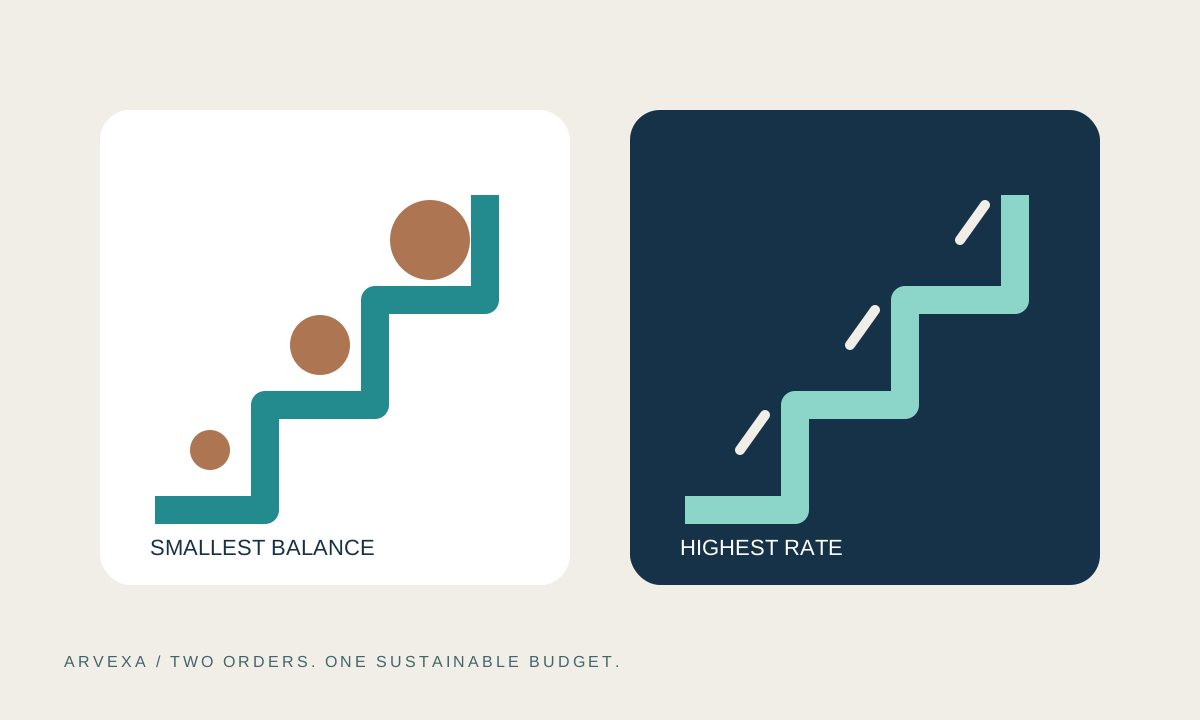
- Snowball directs extra money to the smallest balance; avalanche targets the highest rate.
- With equal payment budgets and stable rates, avalanche generally reduces interest.
- Neither method solves a budget that cannot cover required minimum payments.
Debt snowball and debt avalanche are ways to organize extra payments, not products you buy. Both begin with the same foundation: cover required minimums on every account, then direct affordable extra money toward one target. Once that account is repaid, move the freed payment to the next. The difference is the order in which you choose the targets.
Snowball: start with the smallest balance
The snowball approach targets the smallest outstanding balance regardless of its rate. Eliminating an account can simplify your monthly checklist and provide a visible milestone. That motivational benefit may matter if previous plans fell apart. It is not a mathematical guarantee that the smallest balance is the cheapest debt to repay first.
Avalanche: start with the highest interest rate
The avalanche approach targets the highest rate first. With the same total payment budget, unchanged rates, no new charges, and comparable account rules, directing extra money to expensive debt generally reduces total interest. Progress may feel slower if the highest-rate account also has a large balance, even while the interest savings accumulate.