Personal Loan Scams: How to Check an Offer Before You Share or Pay
A familiar name on a message does not make a loan real. Separate legitimate application steps from requests designed to steal money or account access.
What to take away
- An advance payment to guarantee approval is different from a disclosed loan origination fee.
- Never read banking passwords or one-time codes to an unsolicited caller.
- Arvexa introduces loan options; independent lenders approve and fund loans.
A loan offer can look convincing without being real. Scammers copy business names, spoof phone numbers, and send pages that resemble familiar application forms. Some demand a small payment to release a much larger loan. Others want identity information or access to a bank account. Knowing the difference between legitimate verification and a demand to buy approval can help you slow the process down.
Recognize the advance-fee pattern
The FTC warns about offers that guarantee credit if you first pay for insurance, processing, or a release code. Requests for gift cards, cryptocurrency, or payments to an individual to unlock a loan are serious warning signs. Do not assume a payment is safe because the sender calls it refundable or says approval has already happened.
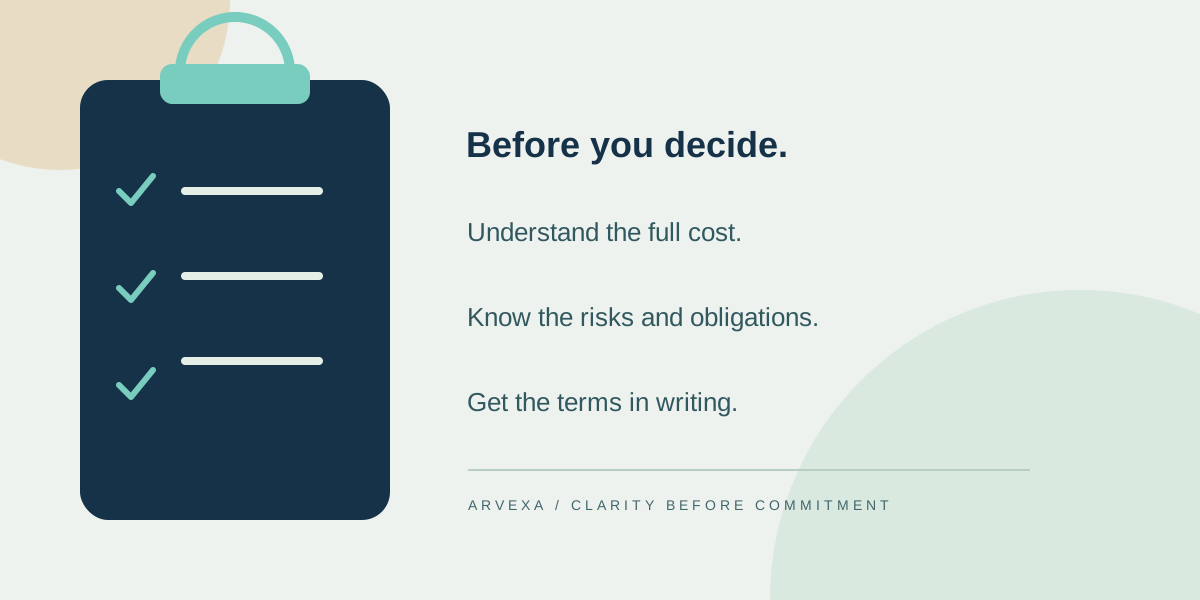
A disclosed origination fee on a genuine loan is not automatically a scam. The distinction is the verified provider, written agreement, fee treatment, and absence of a promise that buying something guarantees approval. Ask how much you would actually receive, how the charge affects APR, and whether any payment is required before you can review binding terms. If answers change under pressure, stop.
Verify the channel, not just the logo
- Reach the company through a website or number you found independently, not through the suspicious message.
- Check the lender's legal identity and applicable state registration or licensing. A directory listing is not an endorsement.
- Do not install remote-access software or read one-time security codes to someone offering a loan.
- Use the provider's verified secure process for sensitive documents. Encryption alone does not establish who operates a website.
What Arvexa does, and what it does not do
Arvexa's marketplace is powered by Engine by MoneyLion. Neither Arvexa nor Engine is a lender; independent lenders make decisions and set final rates, fees, and terms. Checking options uses a soft inquiry, while proceeding with a lender's full application may involve a hard inquiry. Arvexa does not guarantee a match or approval.
If someone claiming to represent Arvexa asks you to pay to guarantee approval, verify the request through arvexafinancial.com or (888) 901-6908 before doing anything. Arvexa's AI scheduling process does not require your bank password, one-time codes, or full account details over the phone. A genuine lender may need identity or bank verification later, but that must happen through its verified process.
If you already shared information or sent money
Contact your bank or payment provider promptly and explain what happened. Preserve receipts, messages, website addresses, and the timeline. If credentials were exposed, use the institution's verified security process to protect the account. Report suspected fraud to the FTC; do not pay a second company that guarantees it can recover the money.
Sources & further reading
Checking your reading status...
Marked read when you reach this ending. Saved only in this browser, with no login. Clearing site data removes your reading history. Marking unread keeps it unread for the rest of this visit.