Debt Settlement and Taxes: What a Form 1099-C May Mean
A reduced payoff may have a tax side. Keep the settlement records and get advice before assuming the forgiven amount is either fully taxable or automatically excluded.
What to take away
- Canceled debt can create taxable income, with important exceptions and exclusions.
- Insolvency is a specific tax calculation, not simply difficulty paying bills.
- Keep records and consult a qualified tax professional rather than assuming a form decides everything.
If a creditor accepts less than the amount owed, the canceled portion may have federal income-tax consequences. That does not mean every settlement produces the same tax bill. The IRS describes exceptions and exclusions that can change the result. It does mean that a debt-reduction percentage alone is not a complete picture of what a resolution may cost.
What Form 1099-C tells you, and what it does not
A creditor may issue Form 1099-C reporting cancellation of debt. Compare the creditor, canceled amount, and date with your records. Contact the issuer if information appears incorrect. The IRS explains that the obligation to report the correct taxable amount is not determined solely by whether a form arrives or whether every field is accurate.
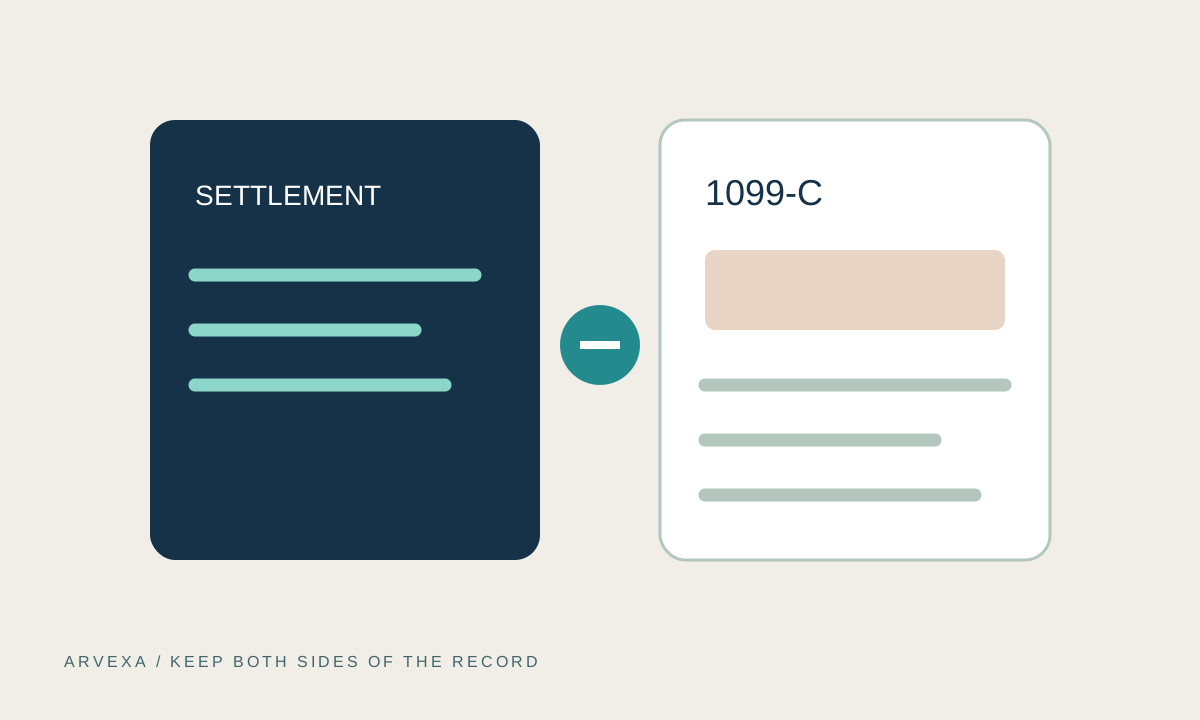
A form is also not a substitute for reviewing the legal status of an account. The IRS notes that if collection continues after a 1099-C, the particular cancellation circumstances need verification. Keep the signed resolution, proof of payments, statements, and correspondence rather than treating a tax document as the only account record.