Arvexa Financial
AboutLoan OptionsDebt ReliefHow It WorksFinance EducationBlogFAQ
(888) 901-6908OFFICE OPENMon-Fri, 8 AM-5 PM Pacific Time
Review My Options
The Arvexa Journal
Costs & transparency

How Debt Relief Fees Work — and When They Are Earned

Settlement fees cannot be earned until a creditor agreement is reached, you approve it, and a payment is made. Learn the structure — and why dollar totals matter more than percentages.
Arvexa Financial Editorial Team
Published October 24, 20263 min readChecking reading status...
A magnifying glass over an itemized statement, showing why the full cost matters.
An itemized dollar breakdown tells you more than a fee percentage alone.

In this article

  1. When settlement fees can be earned
  2. The fee breakdown to request
  3. Costs outside the provider fee
  4. Get your own terms in writing
Your next step, on your terms.

Explore loan options without affecting your credit score.

Check My Options
The short version

What to take away

  • Know when settlement fees can be earned and watch for upfront-fee red flags.
  • Ask for fees in dollars, not just as a percentage.
  • Include account charges and other potential costs in your comparison.

Fees are where debt relief programs are most often misunderstood, and where the rules are actually clearest. Start with the rule that protects you most:

When settlement fees can be earned

A legitimate debt settlement provider cannot earn its settlement fee until three things have happened: it has negotiated an agreement with a creditor, you have approved that agreement, and at least one payment has been made to the creditor under it. Fees charged upfront, before any settlement, are a red flag — and for telemarketed programs, they are prohibited by federal rule.
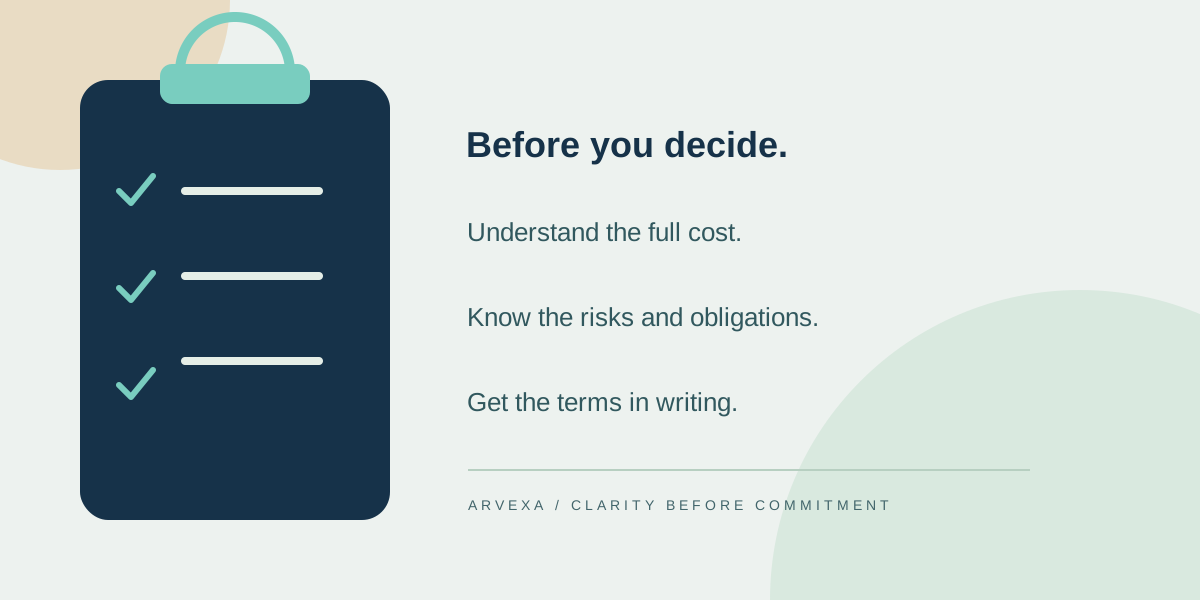
A three-point decision checklist: understand the full cost, know the risks and obligations, and get the terms in writing.
A useful checkpoint for any financial decision, no matter which path you explore.

The fee breakdown to request

  • Settlement fee, per account settled. This is the main fee. Across the industry it is commonly quoted as a percentage of the enrolled debt for that account, not of the reduced amount — which is why the dollar total matters more than the percentage. A 20% fee on $10,000 of enrolled debt is $2,000, whether that account settles for $5,000 or $7,000. Always ask for the dollar figure for your debts, not just the percentage.
  • Account fees. A third-party dedicated savings account may carry setup and monthly maintenance charges. These are separate from settlement fees and should be itemized in writing.
  • Included in the monthly deposit. In most programs, the monthly program deposit is designed to cover both future settlements and earned fees as they come due. That is why the deposit amount and the fee schedule have to be reviewed together — a low deposit with high fees, or vice versa, changes the timeline.

Costs outside the provider fee

What fees do not cover: taxes on forgiven debt in some cases (forgiven amounts may be treated as income, with an insolvency exception in some circumstances — talk to a tax professional), court costs if a creditor sues, or the interest and late fees creditors add while you are not paying. Those are real costs of the path, even if they are not provider fees.

Get your own terms in writing

This article deliberately does not state an Arvexa fee percentage, because Arvexa's exact fees, terms, and timelines must be provided in writing for your specific enrollment before you agree to anything. Any article, ad, or salesperson that quotes you a fee without your debts and deposit in front of them is guessing. Get it in writing, check the dollar total against the enrolled amount, and compare it to the cost of repaying in full — including the interest you would pay over the same period — before deciding.

Disclosure: This article is educational information only. Arvexa Financial is not a lender. Outcomes vary. No savings, approval, or timeline is guaranteed. Fees, terms, and timelines must be provided in writing before enrollment. There is no obligation to proceed.

Checking your reading status...

Marked read when you reach this ending. Saved only in this browser, with no login. Clearing site data removes your reading history. Marking unread keeps it unread for the rest of this visit.
Clarity is a good place to start

Let’s talk about your next move.

Explore personal loan options or ask questions about debt relief. Checking loan options uses a soft credit inquiry. There is no obligation to proceed.

Review My Options (888) 901-6908

Educational information, not individualized financial, legal, or tax advice. Arvexa is not a lender. Approval, savings, and outcomes are not guaranteed.

Keep the clarity going

All articles
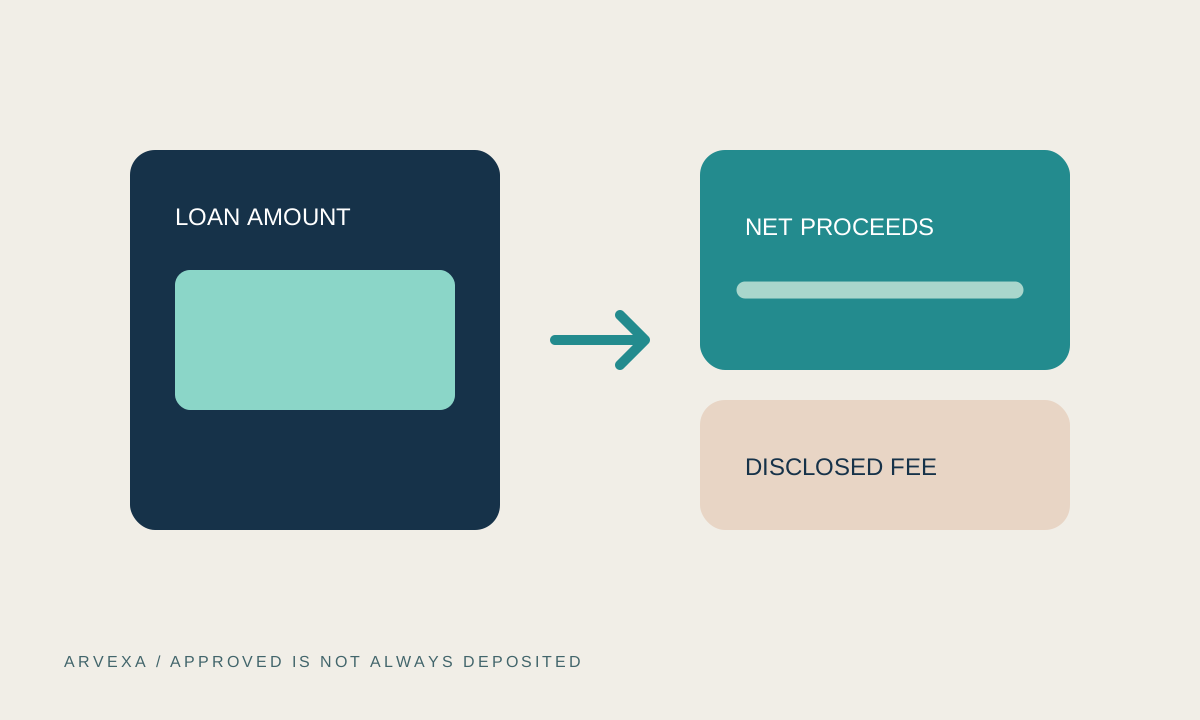
  • A loan amount divided into a disclosed fee and net proceeds beside a repayment total.
    Costs & transparency

    Personal Loan APR and Origination Fees: What You Actually Receive

    The amount approved, the amount deposited, and the total repaid may be three different numbers. Put all three on the comparison sheet.

    Published October 25, 20262 min readChecking reading status...
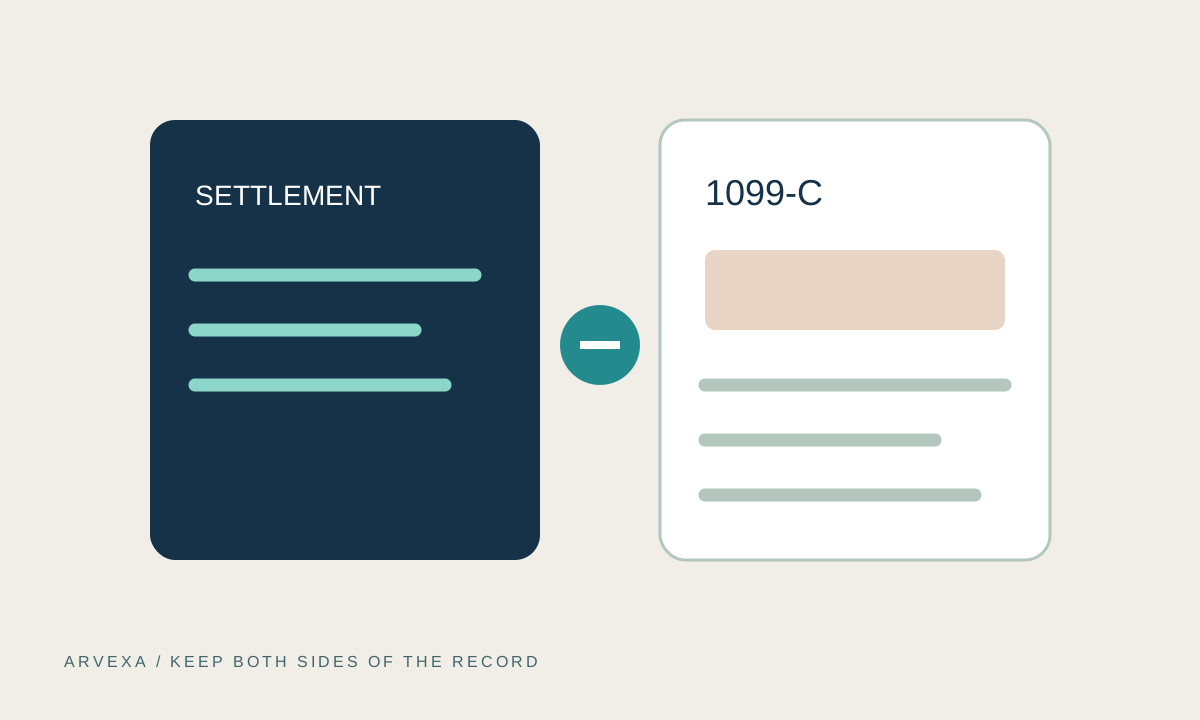
  • A settlement agreement and Form 1099-C beside a folder of tax records.
    Costs & transparency

    Debt Settlement and Taxes: What a Form 1099-C May Mean

    A reduced payoff may have a tax side. Keep the settlement records and get advice before assuming the forgiven amount is either fully taxable or automatically excluded.

    Published October 25, 20263 min readChecking reading status...
  • Two jars balanced on a scale, representing emergency reserves alongside debt repayment.
    Savings & debt planning

    Emergency Fund or Pay Off Debt? How to Think About Both

    Sending every spare dollar to debt can feel productive—until the next surprise bill. A practical framework helps you weigh interest costs against financial breathing room.

    Published October 25, 20264 min readChecking reading status...
Arvexa Financial

Arvexa Financial helps everyday people find the right financial path, from personal loan offers to debt relief and money education, with clear guidance, professional support, and a straightforward first step.

Your Choice, Always: Comparing loan offers or reviewing other options never obligates you. We do not pressure any specific outcome. Any action is solely the customer's independent decision.

Partnered with ACDR-Accredited Debt Relief Providers

Arvexa agent certificationAll agents OCCAM CFHA certifiedConsumer Financial Hardship Advocate
(888) 901-6908

Explore

  • About
  • Loan Options
  • Debt Relief
  • How It Works
  • Finance Education
  • Blog
  • FAQ

Legal

  • Privacy Policy
  • Your California Privacy Choices
  • Terms
  • Disclosures
  • Do Not Sell or Share My Personal Information / Your Privacy Choices

Loan marketplace powered by Engine by MoneyLion (ML Enterprise Inc., formerly Even Financial), NMLS #1475872. Arvexa Financial and Engine are not lenders. Participating lenders make credit decisions and set final loan rates and terms.

Arvexa Financial is not a lender, law firm, or tax advisor. We are a consumer-focused financial marketplace that connects people with personal loan offers, debt relief options, and educational resources with clarity and integrity. Loan offers, approval, rates, and terms are determined by participating lenders. Independent third-party debt relief providers may offer services if a customer separately chooses to proceed. Outcomes vary, and debt resolution programs are not available in all states.

© 2026-2027 Arvexa Financial LLC & AuraLogic Solutions. All rights reserved.