Debt Validation Notices: What to Check Before You Pay a Collector
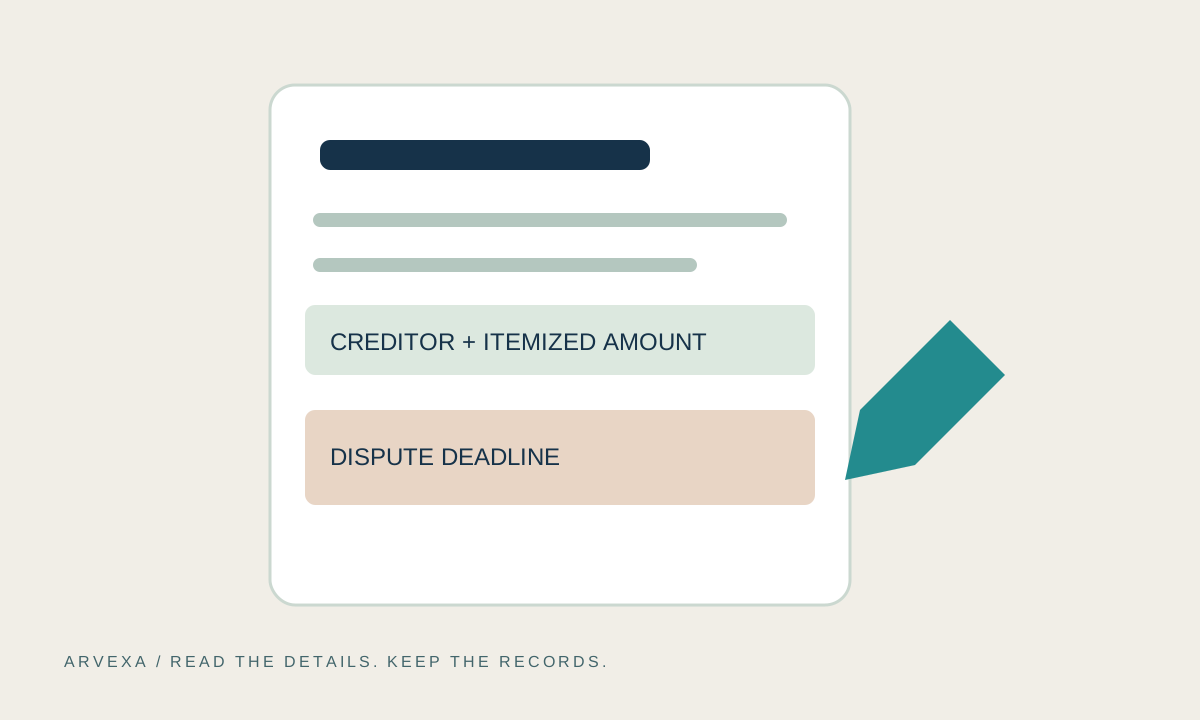
Before reacting to a collection demand, identify the creditor, amount, collector, and dispute deadline. A validation notice is more than a bill.
What to take away
- Validation information helps identify the debt, collector, amount, and dispute rights.
- A timely written dispute can require a collector to pause collection until it responds adequately.
- A dispute request does not replace a response to a court summons.
An unexpected collection message can create pressure to pay before you understand the account. Validation information is meant to help you identify the debt and your dispute options. Under federal debt-collection rules, covered collectors generally provide this information in the initial communication or within five days. The notice may arrive by mail or electronically, subject to applicable requirements.
What the notice should help you identify
The CFPB describes key information such as the collector's name and mailing information, the creditor, the current amount, an itemization of changes from a stated date, and the end of the 30-day dispute period. Compare those details with your records. A different collector name is not proof of fraud, but neither is a partial account number proof that a demand is legitimate.
Look for accounts that were paid, balances that do not reconcile, unfamiliar creditors, and records that may belong to another person. Use independently verified contact information before sharing personal details. Do not publish a full notice online to ask for help; it may contain account and identifying information.